

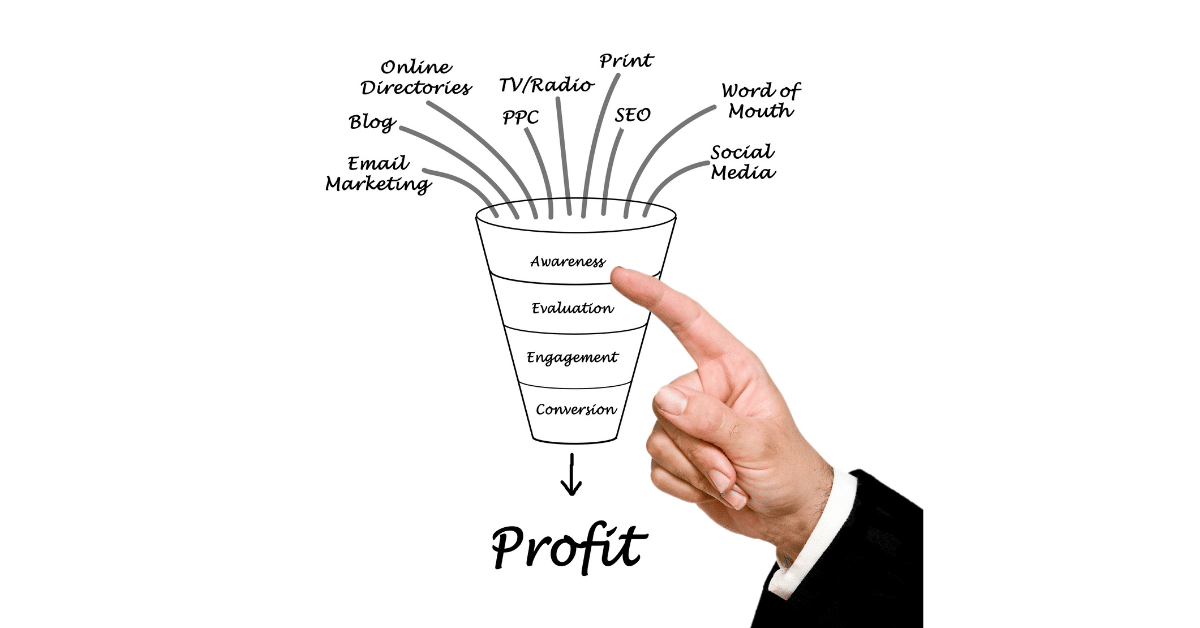
In the fast-paced world of business, understanding and implementing effective marketing funnels is crucial for driving growth and achieving success.
Funnels serve as the backbone of a well-structured marketing strategy, guiding potential customers through their journey from awareness to conversion.
For entrepreneurs and business owners seeking to enhance their growth strategy, exploring proven funnel examples can provide valuable insights into optimizing their marketing efforts.
This post will demystify the concept of business funnels, offering practical examples that can be tailored to fit the unique needs of small to medium-sized businesses.
With the right funnel in place, you can boost customer engagement, increase sales, and foster long-term relationships with your audience.
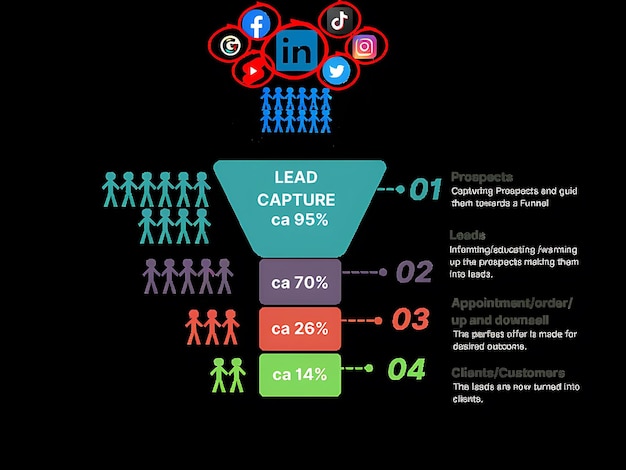
funnels are essential tools for guiding potential customers through their buying journey. This section will cover the basics of funnels, their importance in business, and common types used by successful companies.
Understanding the Basics
A business funnel is a model that illustrates the customer journey from initial awareness to final purchase. It’s called a funnel because it typically starts wide at the top with many potential customers and narrows down as people move through the stages.
The main stages of a typical funnel include:
-
Awareness: Potential customers become aware of your brand or product.
-
Interest: They show interest by engaging with your content or offerings.
-
Consideration: Prospects evaluate your product against alternatives.
-
Intent: They demonstrate a clear intention to buy.
-
Purchase: The customer makes the final decision to buy.
Understanding these stages helps businesses tailor their marketing efforts to meet customers’ needs at each point in their journey.
Importance of Funnels in Business
Funnels play a crucial role in business growth and customer acquisition. They provide a structured approach to converting leads into customers and help identify areas for improvement in the sales process.
Key benefits of implementing funnels include:
-
Improved lead qualification
-
Higher conversion rates
-
Better resource allocation
-
Enhanced customer experience
By mapping out the customer journey, businesses can pinpoint where potential customers are dropping off and make necessary adjustments to improve retention and conversions.
Common Funnel Types
Different businesses use various funnel types depending on their goals and target audience. Some common funnel types include:
Sales Funnel: Focuses on converting leads into paying customers.
Marketing Funnel: Aims to create awareness and generate leads.
Product Funnel: Guides users through the process of adopting and using a product.
Each funnel type serves a specific purpose and can be customized to fit the unique needs of a business. The key is to choose the right funnel that aligns with your business objectives and customer behavior.
Successful Sales Funnel Examples
Examining successful sales funnel examples can provide valuable insights for businesses looking to improve their own strategies. This section will explore two popular funnel types: e-commerce conversion and SaaS subscription.
E-commerce Conversion Funnel
E-commerce conversion funnels guide potential customers from product discovery to purchase completion. A well-designed e-commerce funnel can significantly boost sales and customer satisfaction.
Key elements of an effective e-commerce funnel include:
-
Attractive product pages with clear descriptions and high-quality images
-
Easy navigation and search functionality
-
Streamlined checkout process with multiple payment options
-
Clear shipping and return policies
Case study: An online clothing retailer implemented a simplified three-step checkout process, resulting in a 25% increase in conversion rates.
To optimize your e-commerce funnel, consider:
-
Using retargeting ads to re-engage visitors who left without purchasing
-
Offering personalized product recommendations based on browsing history
-
Implementing abandoned cart email campaigns to recover lost sales
SaaS Subscription Funnel
SaaS (Software as a Service) subscription funnels focus on converting free trial users into paying subscribers. These funnels often involve multiple touchpoints and a longer decision-making process.
Typical stages in a SaaS funnel include:
-
Lead generation through content marketing or paid advertising
-
Free trial sign-up
-
Onboarding and product education
-
Conversion to paid subscription
-
Upselling and retention
Successful SaaS funnels often leverage:
-
Targeted email campaigns to nurture leads
-
In-app messaging to guide users through key features
-
Personalized onboarding experiences
-
Clear pricing tiers with feature comparisons
By focusing on user education and demonstrating value throughout the funnel, SaaS companies can increase trial-to-paid conversion rates and reduce churn.
Marketing Funnel Tactics
Effective marketing funnel tactics are crucial for attracting and nurturing leads. This section will explore lead generation techniques and strategies for nurturing prospects effectively.
Lead Generation Techniques
Lead generation is the process of attracting and converting potential customers into leads. Successful lead generation involves a mix of inbound and outbound marketing strategies.
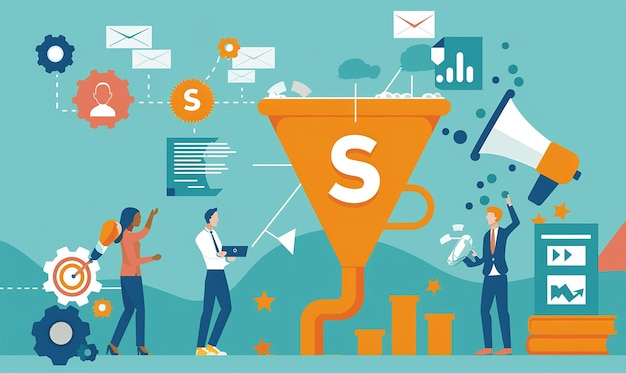
Effective lead generation techniques include:
-
Content marketing (blogs, ebooks, webinars)
-
Search engine optimization (SEO)
-
Paid advertising (PPC, social ads)
-
Referral programs
To maximize lead generation efforts, businesses should:
-
Create valuable, targeted content that addresses customer pain points
-
Optimize landing pages for conversions
-
Use lead magnets to capture contact information
-
Implement A/B testing to refine marketing messages
By consistently applying these techniques, businesses can build a steady stream of qualified leads for their sales funnel.
Nurturing Prospects Effectively
Lead nurturing involves building relationships with prospects throughout the buying journey. Effective nurturing keeps leads engaged and moves them closer to making a purchase decision.
Key strategies for nurturing prospects include:
-
Segmenting leads based on behavior and preferences
-
Creating personalized email campaigns
-
Providing valuable content at each stage of the funnel
-
Using marketing automation to deliver timely, relevant messages
Case study: A B2B software company implemented a lead scoring system and personalized email nurturing campaign, resulting in a 50% increase in qualified leads passed to sales.
To improve your lead nurturing efforts:
-
Develop a clear lead scoring system
-
Create targeted content for each buyer persona and funnel stage
-
Use multi-channel approaches (email, social media, retargeting)
-
Regularly analyze and optimize your nurturing workflows
Enhancing Customer Experience
A positive customer experience is crucial for funnel success. This section will explore personalization strategies and methods for building customer loyalty.
Personalization Strategies
Personalization involves tailoring the customer experience based on individual preferences and behaviors. Effective personalization can significantly improve conversion rates and customer satisfaction.
Key personalization strategies include:
-
Using data to create detailed customer profiles
-
Implementing dynamic website content
-
Offering product recommendations based on browsing history
-
Personalizing email campaigns and promotions
Case study: An e-commerce site implemented personalized product recommendations, resulting in a 35% increase in average order value.
To enhance your personalization efforts:
-
Collect and analyze customer data from multiple touchpoints
-
Use AI and machine learning to predict customer preferences
-
Test and refine personalization algorithms regularly
-
Ensure transparency in data collection and usage
Building Customer Loyalty
Customer loyalty is essential for long-term business success. Loyal customers not only make repeat purchases but also become brand advocates.
Strategies for building customer loyalty include:
-
Implementing a rewards program
-
Providing exceptional customer service
-
Seeking and acting on customer feedback
-
Creating a sense of community around your brand
To foster customer loyalty:
-
Develop a clear value proposition for your loyalty program
-
Train your team to deliver consistent, high-quality customer service
-
Use surveys and feedback tools to gather customer insights
-
Engage customers through social media and community events
By focusing on personalization and loyalty-building strategies, businesses can create a more engaging and profitable customer experience throughout the funnel.
Measuring Funnel Success
To optimize your business funnel, it’s crucial to measure and analyze its performance. This section will cover key performance indicators and methods for analyzing funnel data.
Key Performance Indicators
Key Performance Indicators (KPIs) are metrics that help businesses track the effectiveness of their funnels. Choosing the right KPIs is essential for making data-driven decisions.
Important funnel KPIs include:
-
Conversion rate
-
Customer acquisition cost (CAC)
-
Customer lifetime value (CLV)
-
Average order value (AOV)
-
Churn rate
To effectively use KPIs:
-
Set clear, measurable goals for each funnel stage
-
Choose KPIs that align with your business objectives
-
Establish benchmarks and targets for each KPI
-
Regularly review and adjust your KPIs as needed
By tracking these metrics, businesses can identify areas for improvement and make informed decisions to optimize their funnels.
Analyzing Funnel Data
Data analysis is crucial for understanding funnel performance and identifying optimization opportunities. Effective analysis involves both quantitative and qualitative approaches.
Key steps in funnel data analysis:
-
Collect data from multiple sources (website analytics, CRM, etc.)
-
Identify patterns and trends in customer behavior
-
Perform cohort analysis to understand user segments
-
Use A/B testing to validate improvement hypotheses
Tools for funnel analysis:
-
Google Analytics
-
Mixpanel
-
Kissmetrics
-
Hotjar
To improve your funnel analysis:
-
Set up proper tracking and tagging for all funnel stages
-
Use visualization tools to make data more accessible
-
Combine quantitative data with qualitative feedback (surveys, user testing)
-
Regularly share insights with your team and stakeholders
By consistently analyzing funnel data, businesses can make informed decisions to improve conversion rates and overall funnel performance.