

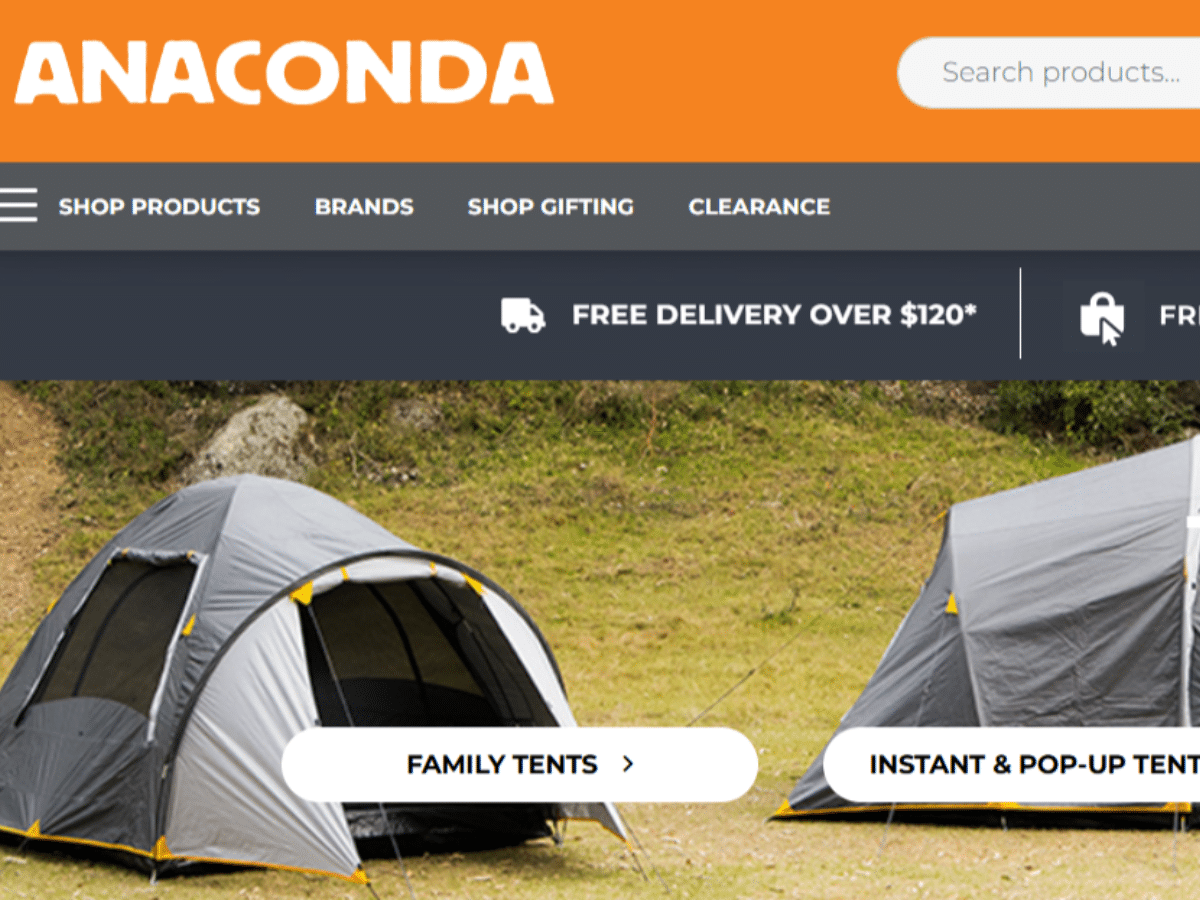
Last video I showed you how Bunnings, a company doing nineteen point six billion dollars in revenue, is leaving hundreds of millions on the table because their systems are broken. Today I want to show you the flip side. A company that actually gets it.
A company doing things that most Australian retailers are not. A company where small business owners watching this can steal every single one of their moves and use them tomorrow.
I am talking about Anaconda.
Full disclosure. I am a mad fisherman and I genuinely love this store. But this is not a love letter. This is a breakdown of exactly what they are doing that works, why it works, and how you can use the same playbook even if you are running a tiny operation out of your spare bedroom.
A Bit of Context
Anaconda is owned by Super Retail Group, the same company behind Supercheap Auto and BCF. Super Retail Group reported revenue of around two point two billion dollars in their last financial year.
Anaconda sits inside that as one of the three core brands. They operate around eighty stores across Australia and have a growing online presence.
They are not Bunnings. But they are serious. And what they are doing online is genuinely impressive compared to most Australian retailers their size.
The Adventure Club — Buying Customer Data With a Discount
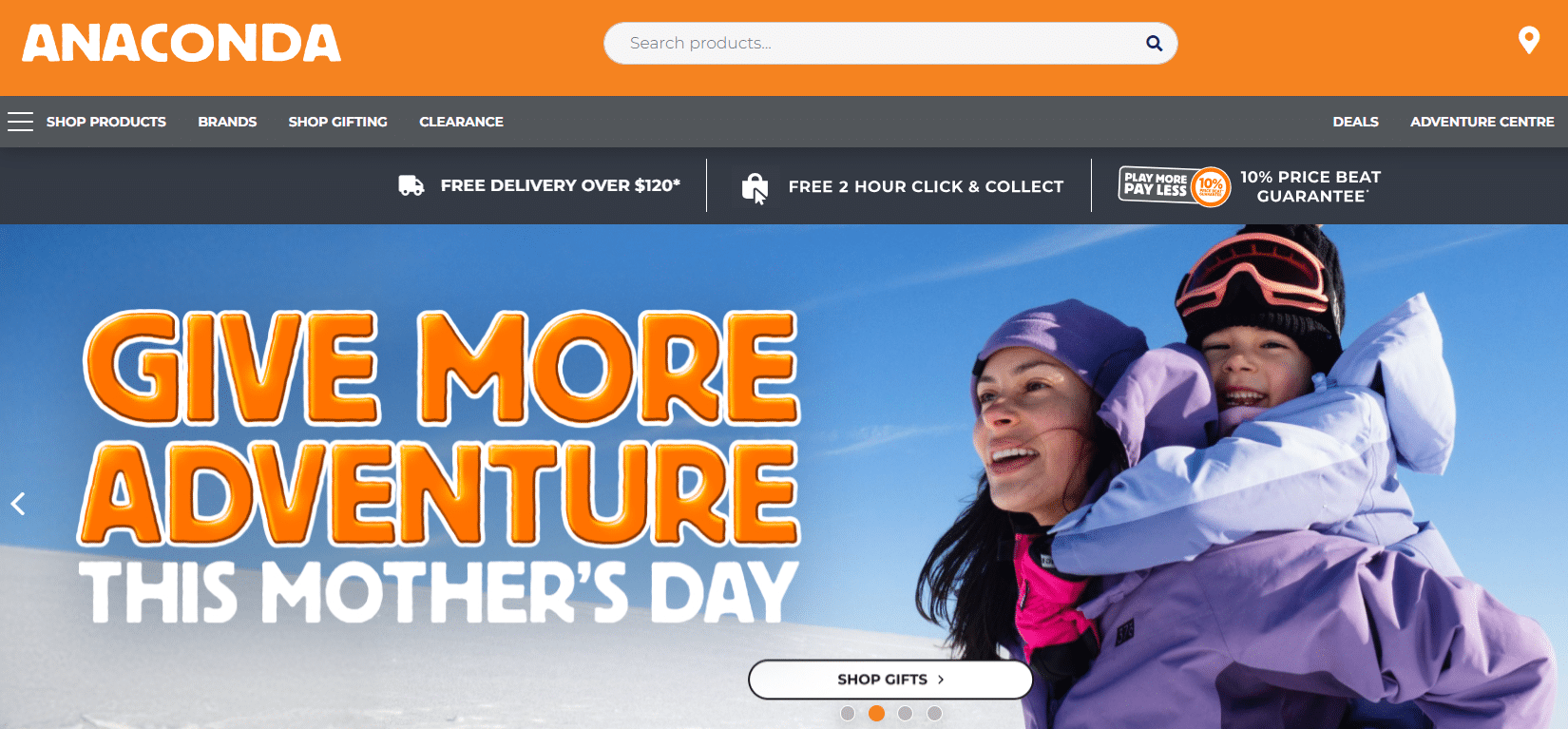
The first thing Anaconda does that most businesses miss completely is their Adventure Club membership. Look at the product page. A tent listed at one hundred and ninety nine dollars at full price.
Club members pay ninety nine dollars. That is fifty percent off.
Some people reading this are thinking how on earth does that make them money? They are halving their margin on that product. Here is exactly how it makes them money.
To get that price you have to join the club. And when you join the club, Anaconda has your name, your email, your phone number, your purchase history, your browsing behaviour, and the ability to contact you whenever they want with deals, sales, new arrivals, and targeted offers.
BCF does exactly the same thing. So does Chemist Warehouse with their club card. So does every smart retailer in the world. The discount is not a cost. The discount is the price they pay to buy your data and your ongoing attention.
And your data and attention is worth far more over your lifetime as a customer than the margin they gave up on one tent.
How Small Businesses Can Use This
For a small business this does not have to be a formal membership program with tiers and apps and plastic cards. It can be as simple as give us your email and get ten percent off your first order. Same principle. You are buying a customer relationship that you own forever.
That email list is an asset on your balance sheet that most small businesses never build, and it is one of the most valuable things you can create in any business regardless of size or industry.
Cross-Selling Done Right
Now look at what happens when you are browsing a fishing rod on the Anaconda site. Underneath the product, before you have even thought about buying, they show you other rods you might like. Similar products. Related products. Higher-end options.
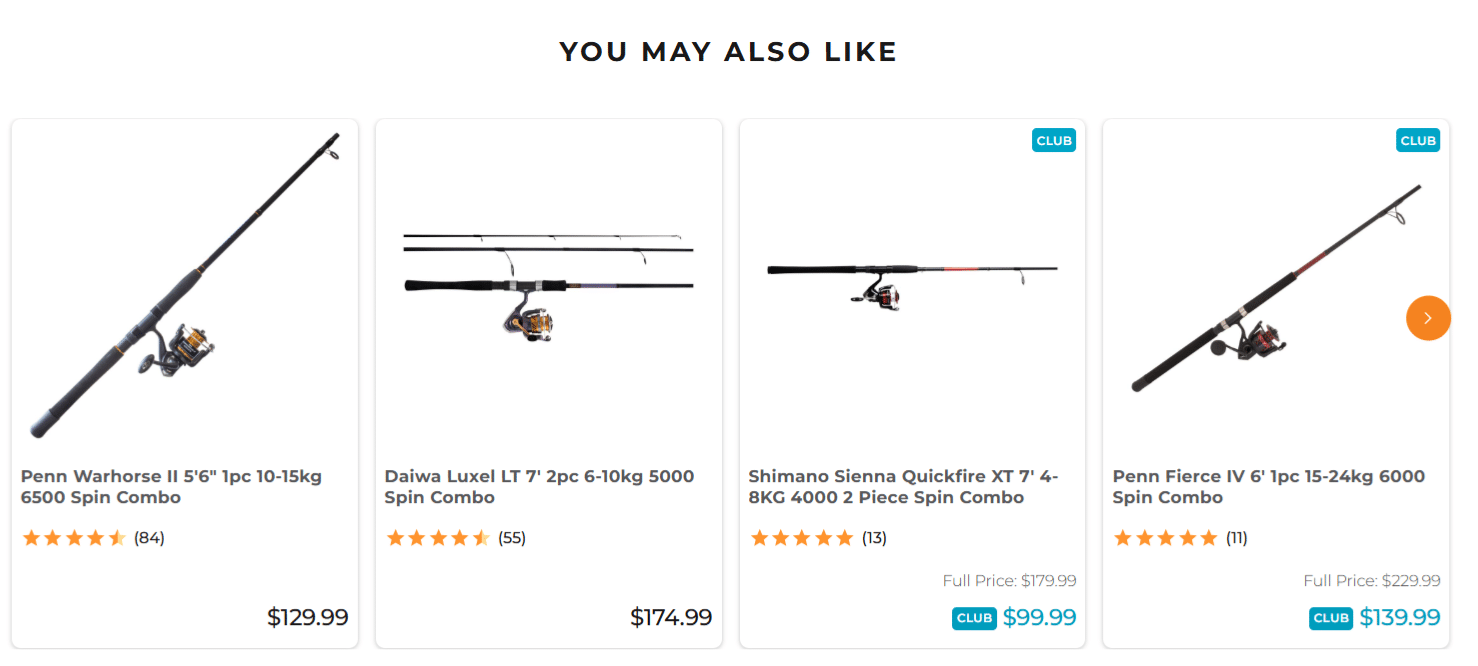
You came in looking at one rod. Now you are looking at four.
This is called cross-selling and it works because the customer is already in buying mode. Their wallet is already open mentally. Showing them a related product at that exact moment costs nothing and converts at a significantly higher rate than any ad you could run to a cold audience.
Amazon built a large part of their empire on this. Their customers also bought feature is responsible for roughly thirty-five percent of their total revenue. Thirty-five percent. From one feature. Let that number sink in for a moment.
For a small business with an online store, if your platform does not have related products showing on your product pages, fix that today. It is the single easiest revenue increase available to you and it requires zero additional traffic.
No extra ad spend. No new content. No new products. Just showing people what else they might want at the exact moment they are already in the mood to buy.
The Add to Cart Upsell
Watch what happens when you add something to the Anaconda cart. The moment you click add to cart, a popup appears confirming what you have added. But it does not just confirm. Right there, alongside the confirmation, it shows you more products you might want to add.
You just decided to buy. Your buying intent is at its absolute peak. That is the single best moment to show you something else. Not before you decided to buy. Not after you have paid. Right at the exact moment you clicked the button.
This is the upsell moment.
And most websites completely waste it by either showing nothing or just redirecting you straight to the cart page. The opportunity vanishes and nobody even notices it was there.
The Numbers Behind Cart Upsells
The average order value increase from cart upsells is typically between ten and thirty percent. On a hundred thousand dollars in annual revenue that is an extra ten to thirty thousand dollars from one single change. No new traffic. No new customers. Just more revenue from the customers you already have.
For small businesses on Shopify, WooCommerce, or pretty much any modern ecommerce platform, there are apps and plugins that add this exact feature in under an hour. The setup is trivial. The return is enormous. And yet the vast majority of small online stores do not have it turned on.
Capturing Email First at Checkout
This is the big one. The thing that separates smart operators from everyone else.
When you go to your cart on the Anaconda site and click to checkout, look at what they ask you for first. Not your delivery address. Not your suburb. Not whether you want click and collect or home delivery. They ask for your email address. Just your email. Nothing else.
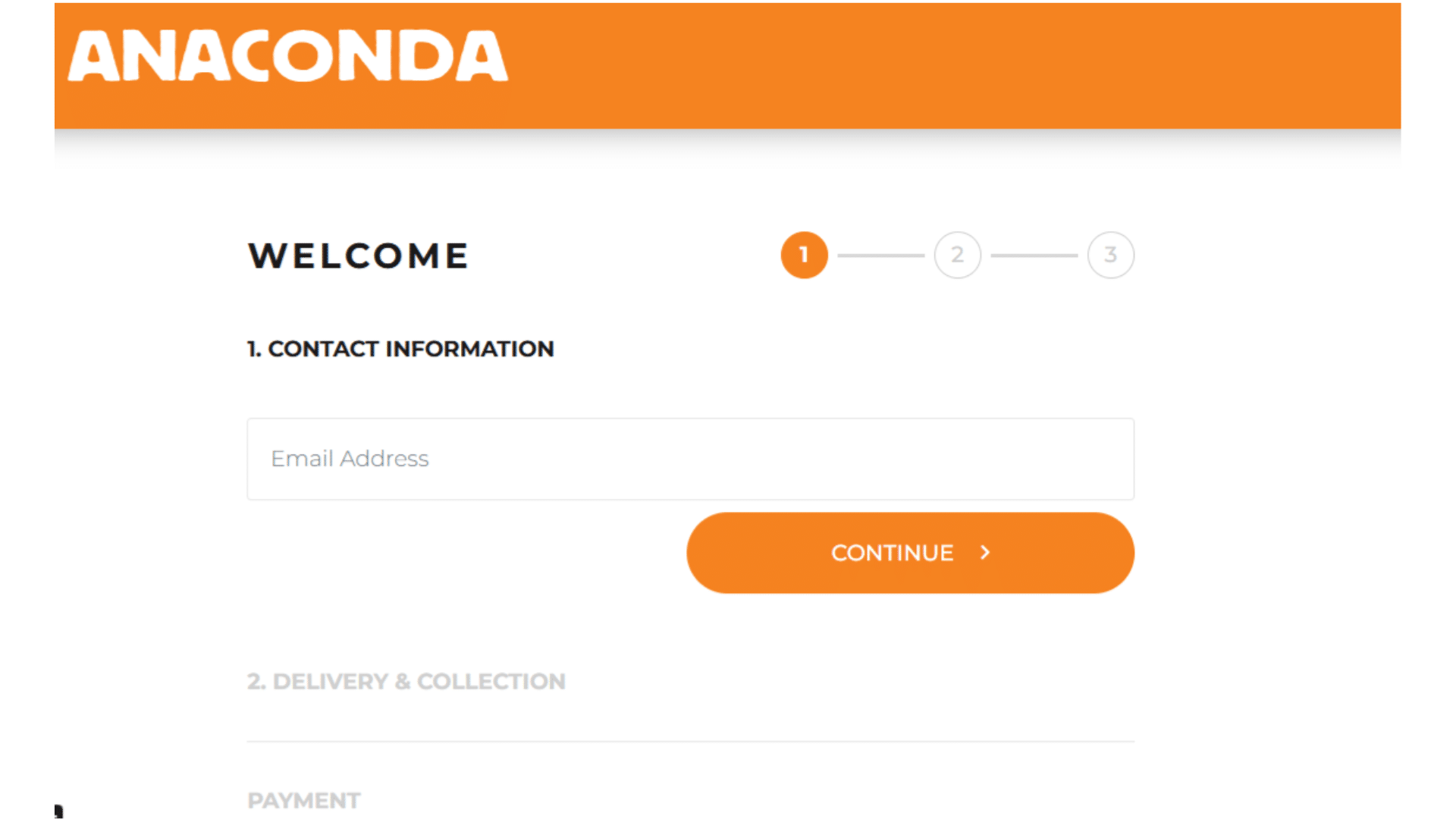
And here is exactly why that is worth potentially millions of dollars to them.
Industry data shows that seventy percent of people who add something to an online cart never complete the purchase. They get distracted, they second-guess themselves, their phone rings, they decide to think about it. And they leave.
If Anaconda asked for your delivery details first, like Bunnings does, and you leave without completing the purchase, they have nothing. You are gone. They cannot follow you. They cannot remind you. That sale is dead.
But if they capture your email first, which they do, and you abandon that cart, they know exactly who you are and exactly what you left behind.
The Abandoned Cart Email That Pays for Itself
Anaconda runs abandoned cart email sequences. The email says you left something behind. Here is your fishing rod. Here is your tent. Click here and finish your checkout. Simple, direct, and effective.
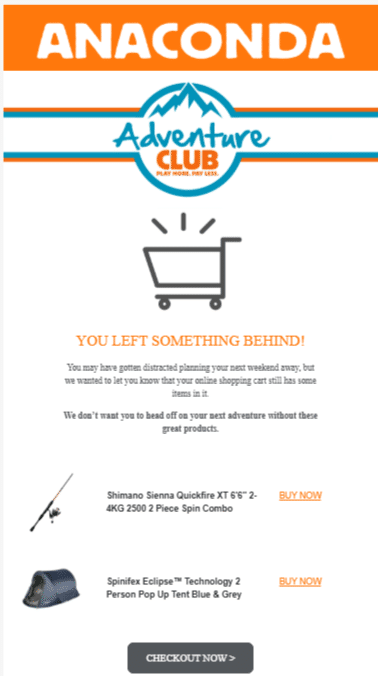
Shopify’s own data shows abandoned cart emails recover an average of twenty-three percent of lost sales. Twenty-three percent of sales that would have been completely gone. Revenue that was walking out the door, caught at the last second by a single automated email.
For a small business doing two hundred thousand online per year, that same maths is twenty-three thousand dollars in recovered revenue sitting unclaimed if you do not have this set up. And the fix takes about thirty minutes on any modern ecommerce platform.
Thirty minutes of setup for a system that runs forever and brings back revenue every single day without you lifting a finger.
Brand Partnerships — The Strategy Australia Ignores
One more thing Anaconda does that most Australian businesses completely ignore. They run brand partnerships. Great Northern beer. Complementary outdoor brands. Joint promotions where both sides bring their audience and both sides win.
This is standard practice internationally but in Australia we have a culture of everyone keeping to themselves. Everyone protecting their turf. Everyone thinking that working with another business means giving something away. It does not.
It means both of you get in front of a new audience that is already pre-qualified.
Anaconda customers who love camping are exactly the kind of people Great Northern wants to reach. Great Northern customers who love the outdoors are exactly the kind of people Anaconda wants to reach.
Both audiences overlap. Both brands benefit. Neither one is giving anything away.
How Small Businesses Can Partner Up
For small businesses, think about who else serves your exact customer but does not compete with you. A wedding photographer and a wedding florist. A personal trainer and a nutritionist. A bookkeeper and a business coach.
A dog groomer and a pet supply store. The overlaps are everywhere once you start looking for them.
You could be cross-promoting to each other’s email lists tomorrow and it costs nothing. No ad spend. No platform fees.
Just two businesses deciding to introduce their customers to each other. The maths works at every level, from a sole trader to a publicly listed company.
The One Thing Holding Anaconda Back
I said this was about what they are doing right. But I cannot in good conscience leave this out. Their site speed is a GTmetrix grade E. Performance score forty-seven percent. That is not good for a retailer of this size.
The content structure is acceptable at seventy-three percent. But the performance score is dragging everything down. Too many server requests. Unoptimised images. Outdated APIs doing unnecessary work in the background.
A one point nine second largest contentful paint and one point five seconds of total blocking time means people on slower connections are waiting. And people who wait, leave.
For a company with their traffic volumes, even a ten percent improvement in conversion from faster load times is a significant number. This is fixable. It is not a rebuild. It is optimisation work that a good developer could address in a week.
Compress images, defer non-critical scripts, clean up legacy API calls, and implement proper caching. Standard work that would move the performance score dramatically.
What You Should Be Doing Tomorrow
Here is the summary of what Anaconda gets right that you should be doing too.
Build a club or loyalty program. Not to give away margin, but to buy customer data and the right to market to them forever. The discount is not a loss. It is an investment in a lifetime relationship.
Cross-sell on every product page. Your customer is already in buying mode. Show them what else they might need. This costs nothing and the conversion rate on related product suggestions is dramatically higher than cold advertising.
Upsell at the add-to-cart moment. Buying intent peaks the second they click that button. Do not waste it by redirecting straight to the cart. Show them one more thing they did not know they needed.
Capture email first at checkout. Before anything else. Before delivery details. Before suburb selection. Just the email. Then run abandoned cart sequences and recover the twenty-three percent that would have walked out the door.
Find a partnership. One other business that serves your exact customer and run a joint promotion. Both of you win. Both of you grow. Neither of you pays for advertising.
None of this is complicated. None of this requires a big budget. Anaconda does it at scale but the mechanics work just as well for a business doing two hundred thousand a year as they do for one doing two hundred million.
The businesses that figure this out are the ones that grow. The ones that do not keep wondering why they are working harder every year and the numbers are not moving.
If you want me to take a look at your specific site and tell you exactly what is working and what is not, the link is below. It is free. No pitch at the end. Just straight answers.